
Tohoku, Japan – 3 years after
First I was not sure if I should publish this post. I realize that it is a sensitive matter for many of my friends and readers. The photos here are silent witnesses of a time only a few months after the 3-11-11 disaster in Tohoku, Japan. This is how I was able to witness this place thanks to the kind help of a local friend. As a note, I am an opponent of disaster tourism, just to get a glimpse of a tragedy and to be able to say that I was here.
There are many people, Japanese and non-Japanese who have ties to Japan and Tohoku. I created this post as a reminder of what happened there, to not forget and hopefully continue to help. In addition I would like to share my story about this disaster from the perspective of somebody, who was not in Japan at this time, however has close friends and family at this location. I am very sure that many people with similar stories and experiences will feel very much the same way, to share their story in an effort to help the brave people of Tohoku. A continuation of this story can be found after the photos.
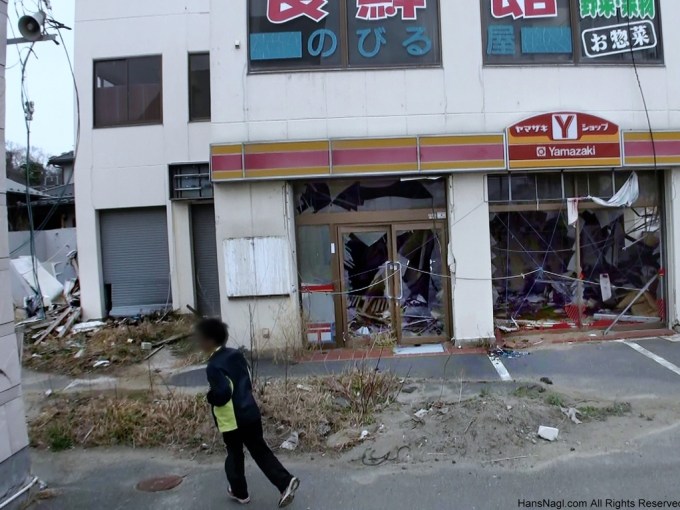
Nobiru – Miyagi, Tohoku, 2012
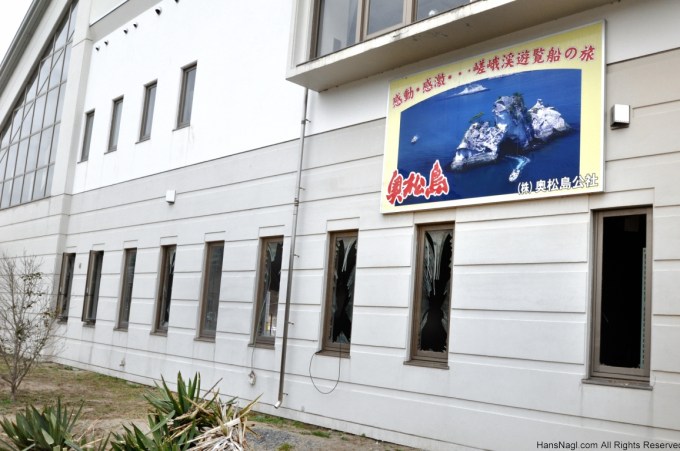
Nobiru – Miyagi, Tohoku 2012
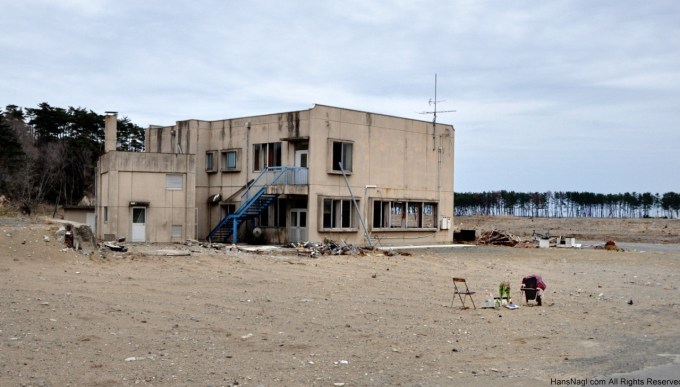
Nobiru – Miyagi, Tohoku 2012
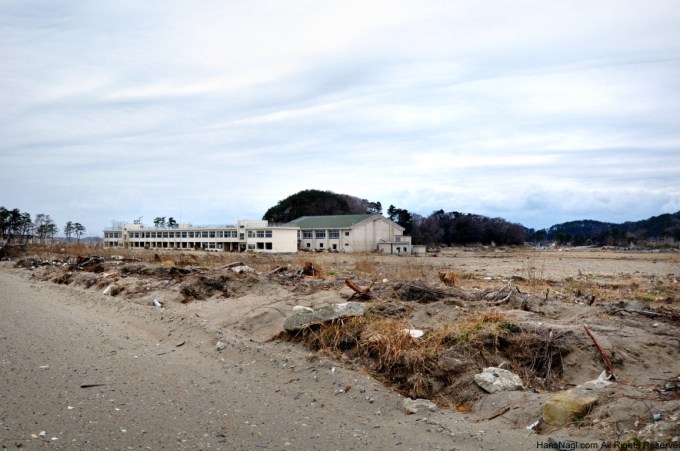
Nobiru, Miyagi – Tohoku 2012
Many years ago when I first had a chance to visit Japan people were very confident that a major earthquake followed by a tsunami would never happen. A nuclear disaster, no way. In fact, some of my friends responded to somebody’s business or other predictions that the likelihood of this actually becoming reality is about as much as Mount Fuji erupting, or, a major tsunami ever happening. That was before March 11, 2011. With some warning signs starting in January 2011, but mostly unnoticed, seismic events started to happen in many places within and around Japan.
January 29, 2011, Kirishima, Kyushu, Japan. The biggest volcano eruption in this area since 1959 shakes this place and covers everything in dust. Daylight turned dark. We just visited there a couple of months before and realized that at least one volcano showed increased activities. Hiking in the area was off-limits.
February 21, 2011, New Zealand, South Island. A major earthquake strikes. Many people at Christchurch lost their lives. Among them Japanese students. While Japan mourns their lost daughters and sons nobody really anticipated that similar tragedy would just be around the corner.
March 11, 2011. I still remembered when I watched the Japanese evening news in the United States, 13 hours behind, in the morning and realized, yes, there was an earthquake and a tsunami in Japan. Remembering Kobe, I thought it would be bad but could not in my faintest thoughts imagine that bad was a gigantic understatement. The first estimates of missing or lost people was about 3000 or so. Bad enough. But then, while the day was going on, and, more and more information reached our news channels the size of the tragedy started to unfold. This is when it finally clicked. Japan is in a crisis and we are far away from it. Let’s call up relatives to check in. Easy enough, telephones are always working and Japan is a high-tech country. This is when my wife and I realized that this tragedy is a larger than we thought. Lines were busy. Attempt after attempt to hear even an indication of a ring tone instead of a busy signal, or a message that all lines are busy, failed. How about Skype? No chance. Email? Got through to some and with great relief many friends responded that they are OK.
However, we still could not get through to our folks in Tohoku, especially those in Fukushima, not even to my parents-in-law in Chiba outside Tokyo.
Nuclear powerplants blew up, something I would not have believed could actually happen. Even after it happened I still could not believe it and played it down on Facebook encouraging those living in Japan. It just took time to completely comprehend the tremendous magnitude of what happened.
Still trying on the phone, Skype, whatever came to mind. No getting through was agonizing. Then, finally, my wife’s father picked up. They are OK. How about the others in Fukushima, grandma, uncle, everybody? OK. But, in need of water and basic items. Every time a shipment of daily necessities arrived at the local convenient store people standing in line for hours quickly bought whatever they could grab emptying shelves within less than a very few hours. Older people not able to stay in line for so long pulled the shorter stick.
Some of our Japanese friends stashed up their small cars with supplies and drove to Tohoku to search for missing friends which they eventually found fortunately in good shape. That drive, was a major attempt to find a usable road to get somewhat close. When we read on their blogs and emails that they got through and met the missing friends in good shape it was more than just a great relief. (JET – Yoshida-san’s blog – March 12, March 13, March 14, March 15, ) It almost felt as if we had a small win over the gigantic blow nature delivered to us.
Why am I writing this? For some reasons, because I had the wonderful opportunity to visit and live in Japan, and, in particular because of friends and family in the Tohoku region I thought how fragile life can be and how quickly people’s life can change, not only physically but also emotionally. It struck me in particular because of my many memories of this place and the many people who have had a good glass of sake with me and talked about this or that. Matsushima- , staying with about ten people at a local hotel and in one small room. Sendai, visiting Aoba castle and being introduced to gyu-tan, my baptism to Sake at the local Tengu restaurant, and my many, many visits there. By the way, I have to say this here, I am still kind of upset that Date Masamune’s statue at Sendai Station is gone. This was a meeting point and point of orientation. Last time I visited not seeing the statue I lost my sense of direction. This statue was a very special landmark for me.
One of my most unforgettable experiences was a visit to a Matsushima based friend’s home in the summer of 1997 (or so), overlooking the bay with its oyster farms, watching the boats returning while the cicadas where so loud in the midst of dreaming about our future and what life would have to offer in general. My last visit to Matsushima in the winter more than 2 years ago with a good friend of us rekindled all of these memories. Fortunately it is all still there.
First when we entered the area of Nobiru I was stunned looking out of the window of my friend’s car. It hit me like a rock as I looked at half-collapsed buildings, washed up sand from the beach where it is not supposed to be, stuff, random items like chairs and flower pots suddenly standing at an empty place. I know that I held a camera in my hand ready to take photos. I forgot…
It was hard enough to ask our friend to drive through the area one more time. Taking these photos I was stunned by the courage of the people to continue living here taking away my thoughts about how to take a good photo. I just took photos, or so I thought, while lost somewhere between embarrassment of even taking these pictures and the drive to hold on to visual memories for the sake of never ever forgetting this story and these brave people in the midst of all of this.
Only some photos turned out OK, most of them did not show anything besides blurred images, a jumble of sand, houses, things, blue sky and sea. Maybe an image of the tsunami within my camera? In any case, looking at the pine trees lining the shore, the peaceful ocean, children’s’ voices I felt that people at this place own their future and courageously hold on to it, for the sake of all of us.
Finally I would like to submit that this is not a sightseeing spot to see results of mother nature’s rage. It is a place to experience and celebrate the resilience and toughness of the people I got to know many years ago. Friendly, stubborn, hard-working, warm-hearted people of Tohoku. No doubt that this area will again offer the same amazing experiences to many other generations of Japanese or non-Japanese people I had there and still have. For many years to come. Without doubt.
 Cafe Gute Katze & GoodTimes English